
Verify Before You Share: A Practical Editorial Guide to Breaking News Literacy
Breaking news moves faster than confirmation. This editorial explains why the first hour is risky and gives you a simple five-point checklist to use before you share anything.

The most dangerous sentence on the internet right now is not a false headline. It is a true fact from the wrong day, the wrong place, or the wrong context. Every hour, thousands of people share a breaking news alert within seconds of reading it. Most of those shares come from trust in the source, not from verification. That gap between seeing and checking is where misinformation does its real work.
This editorial is not a lecture about media bias. It is a practical checklist for the moment a big story breaks and your finger hovers over the share button. If you take one thing from this piece, take the five-point verification table in the middle of it and use it the next time a story feels urgent.
Why breaking news is the most dangerous content online
Breaking news has three features that make it uniquely vulnerable to error: speed, emotion, and incomplete sourcing.
Speed matters because alerts arrive before details are confirmed. The first version of a story is often based on a single eyewitness account or a single official statement that later changes. A headline can be technically accurate at 10:00 and actively misleading by 10:30 because the situation has moved.
Emotion matters because big stories trigger fear, anger, or outrage. Emotional arousal reduces the time people spend checking details. Studies of sharing behaviour consistently find that emotionally charged posts get shared faster and with far less scrutiny than neutral ones.
Incomplete sourcing matters because in the first hour, journalists are still identifying who is involved, what happened, and what can be verified. The absence of confirmed detail in early coverage is not a sign of failure. It is a sign that the reporting is still in progress.
The first three minutes: what to do before you share
When you see a breaking alert, you make a decision within seconds. Adopt this three-minute routine and you will avoid the most common sharing mistakes.
Minute one: read past the headline. Headlines are written to be clicked, not to be complete. The body usually contains the qualification you need. If a headline says “City orders evacuation” and the body says “officials advise residents in two neighbourhoods to prepare”, those are different facts with different urgency.
Minute two: check the date. Old stories resurface constantly. A story from last year with a fresh headline creates the false impression of a current event. Look for the publication timestamp, not just the timestamp on the post you are viewing.
Minute three: ask who benefits and who is harmed. Every story has a source, and every source has a position. Identifying the source, their role, and their possible interest in the story is the fastest way to judge whether the claim deserves your endorsement.
A five-point verification checklist
This table is built for the moment when a story feels urgent. Run each check before you share.
| Check | What to look for | Ask yourself |
|---|---|---|
| Original source | A primary report, not a repost of a repost | Who actually reported this first? |
| Independent confirmation | A second, unconnected outlet or an official statement | Does anyone else confirm it? |
| Timestamp and location | Exact date and place named in the body | Could this be old or from elsewhere? |
| Official statements | A named agency, department, or spokesperson | Is there an official record I can check? |
If a story fails two or more of these checks, slow down. Sharing a story that fails these checks is how false narratives spread. If you cannot find an original source, that is not a reason to share it anyway — it is a reason to wait.
How to spot recycled and out-of-context clips
The most common visual deception is not a fake video. It is a real video from another event, presented as current. When a major storm strikes one region, clips from previous storms in other countries regularly circulate as if they were new. The clips are real. The context is false.
Three signs help you spot this pattern. First, check the weather: a clip that shows snow cannot illustrate a storm reported as rain. Second, check the language and signage: street signs, shop fronts, and emergency vehicle markings will often contradict the reported location. Third, check the vehicles: license plates and uniform details are difficult to fake and easy to overlook.
None of these signs prove a video is fake. All of them are reasons to wait for a newsroom confirmation before you share. A real clip with the wrong label does just as much damage as a fabricated one, and it reaches more people because it looks authentic.
What a newsroom is doing while you wait
When a story breaks, a responsible outlet is not silent. It is doing several tasks at once: confirming basic facts with named sources, checking the timeline of events, verifying visual material, and deciding what can be published safely.
This is why you sometimes see a short update followed by a longer version an hour later. The longer version exists because the reporting took time. When an outlet corrects or updates a story, that is the system working, not the system failing. Corrections are not a sign of an unreliable newsroom; they are the reason you can keep trusting the outlet that makes them.
You can support this process by sending what you know to the newsroom, with one important condition: tell the journalists what you saw yourself, not what you saw posted. Eyewitness accounts are useful to a newsroom. Screenshots of other people’s screenshots are not.
Build your own verification routine today
You do not need special training to stop spreading misinformation. You need one habit: before you share anything that claims to be breaking news, open the story and confirm that it answers four questions.
What exactly happened. Where exactly it happened. When exactly it happened. Who confirmed it.
That is the whole routine. It takes less time than checking your notifications, and it changes your value to your network from a repeater to a filter.
If you are reading this while a major story is unfolding, start with the five-point checklist. If the story passes every check, share it with confidence. If it fails even one, wait ten minutes. The truth will still be there, and so will your reputation.
Notícias relacionadas

Flamengo é eliminado pelo Estudiantes nos pênaltis após dois jogos sem criatividade na Libertadores 2026
O Rubro-Negro não acertou um chute no gol em 47 minutos de jogo no Maracanã, mesmo com um jogador a mais durante…
Ler matéria
Atacante do Grêmio perde R$ 22,5 mil em golpe aplicado por falso Luís Castro
José Enamorado foi vítima de um estelionatário que se passava pelo técnico português. O suspeito prometia escalação e vaga no time titular…
Ler matéria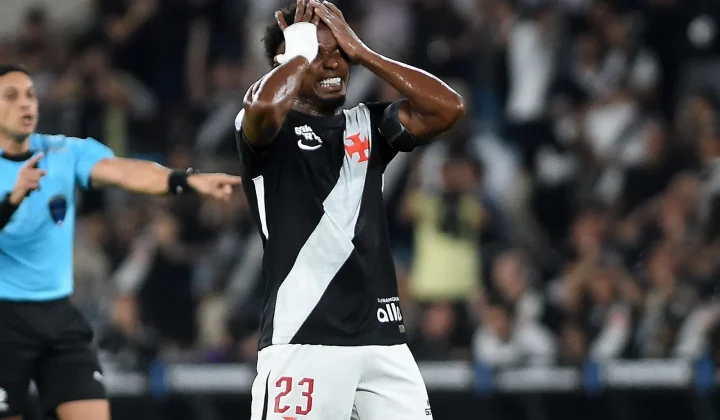
Vasco embolsa R$ 15,1 milhões na Sul-Americana; veja quanto o clube deixou de ganhar
Eliminado na semifinal pelo Boca Juniors, o Vasco encerra participação na Copa Sul-Americana com premiação total de R$ 15,1 milhões. Se tivesse…
Ler matéria
Corinthians volta a vencer por sete ou mais gols no feminino após mais de um ano, com 7 a 0 sobre o Caracas na Libertadores
As Brabas aplicaram 7 a 0 no Caracas pela segunda rodada da Libertadores Feminina e garantiram vaga nas quartas de final. Foi…
Ler matériaWiki relacionada
Como Escolher o Tênis de Corrida Ideal
Encontrar o tênis de corrida certo é crucial para evitar lesões e melhorar seu desempenho. Este guia detalha os fatores essenciais a…
Ler matéria
Brasileirão Série A
Página de referência para a principal divisão do futebol brasileiro.
Ler matéria
CONMEBOL Libertadores
Referência evergreen para formato, calendário e cobertura da Libertadores.
Ler matéria