
A 28-Year Fugitive Hunt: The Unresolved Cost of John Joseph Ruffo’s Manhunt
The ongoing search for John Joseph Ruffo, a white-collar fugitive from a 1998 bank fraud conviction, highlights the significant and accumulating costs of long-term law enforcement efforts and the challenges in achieving full accountability.
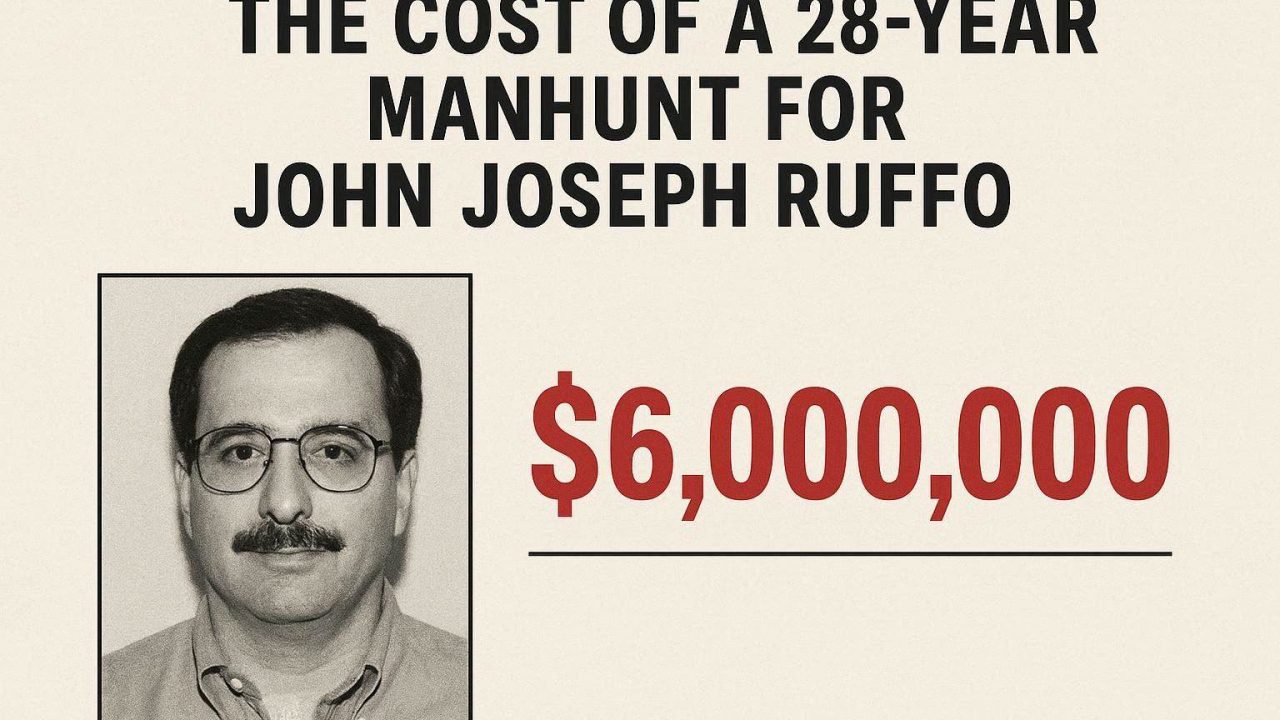
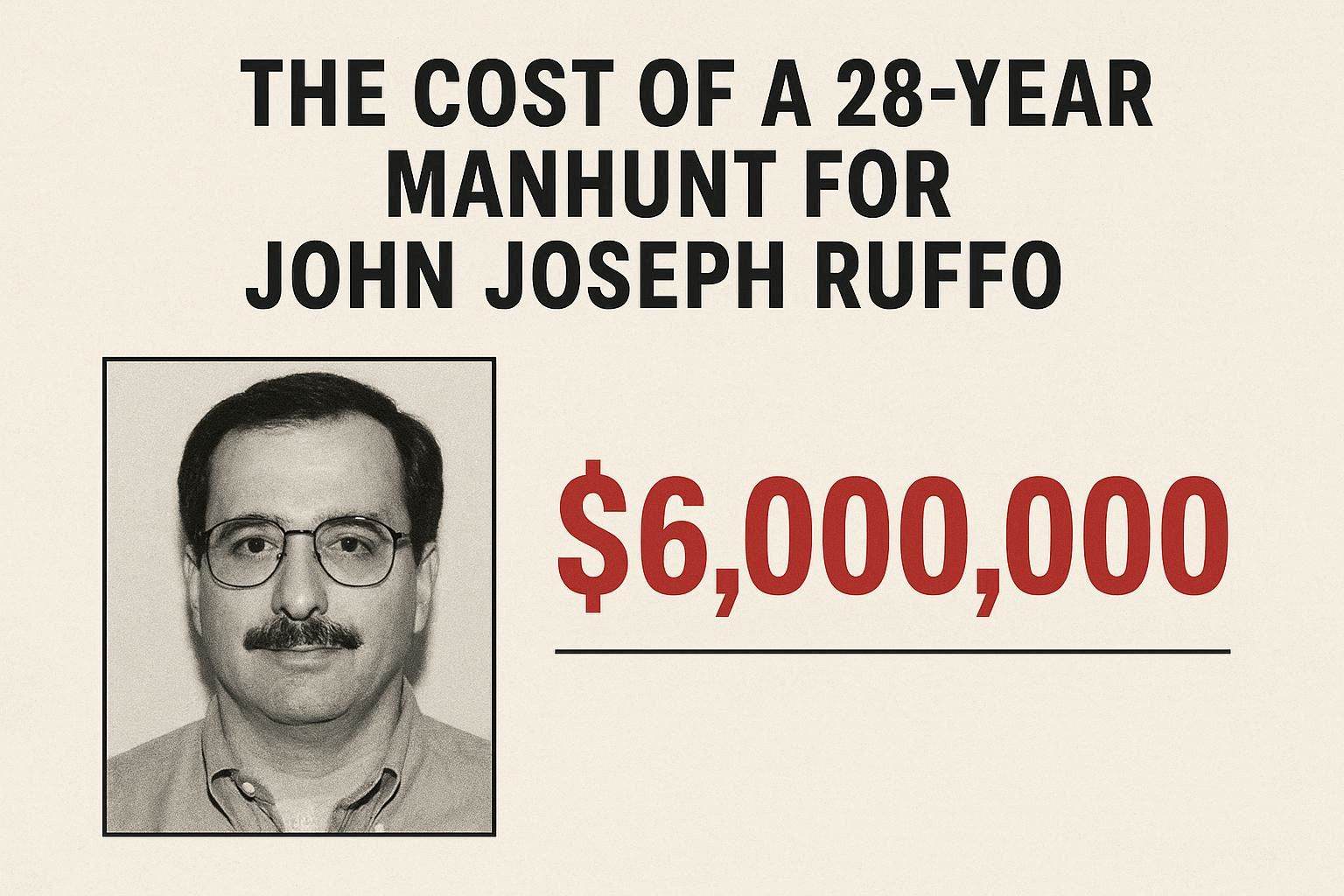
The pursuit of John Joseph Ruffo, a former New York computer executive convicted in a massive bank fraud scheme, has evolved into a 28-year institutional commitment by federal law enforcement. Ruffo, who failed to report to federal prison in 1998 after being released on a $10 million bond, remains at large, making his case one of America’s longest-running white-collar fugitive hunts. The U.S. Marshals Service continues to list him among its 15 Most Wanted fugitives, ensuring his case remains active within the federal fugitive infrastructure.
The financial and operational implications of such an extended manhunt are substantial, though not typically itemized as a single-case budget. The cost accumulates over years through ongoing investigative efforts, including personnel time dedicated to reviewing leads, maintaining intelligence, coordinating across jurisdictions, and conducting public outreach. Every credible tip, potential sighting, and new investigative angle requires assessment and follow-up, consuming resources that could otherwise be allocated to other critical missions.
Accumulating Costs
A manhunt spanning nearly three decades does not involve a single, dramatic expenditure but rather a continuous drain on resources. This includes the consistent expenditure of personnel time for lead review, database maintenance, interagency communication, and case management continuity. The U.S. Marshals Service, responsible for a broad range of duties including fugitive apprehension, prisoner operations, and judicial security, must balance these long-running cases with other high-demand federal missions.
The continuity costs of a case like Ruffo’s are also significant as investigators change, technology advances, and public attention inevitably fades. The government must maintain institutional memory to recognize and act upon a lead years after it initially surfaced. This involves preserving enough information and investigative momentum so that accountability remains a possibility, even after decades have passed.
Beyond the direct costs of investigation, there is the systemic cost incurred when a convicted defendant evades justice. Prosecutors have proven the case, courts have imposed a sentence, yet custody is never secured. This failure to enforce a sentence fundamentally alters the public perception of the original conviction, transforming it from a resolved chapter of accountability into an unfinished promise.
The Ruffo case underscores the limitations of financial guarantees when a defendant demonstrates a propensity for deception and potentially possesses undisclosed resources. While bond forfeiture can recover funds or penalize sureties, it does not offset the cost of the manhunt, the delay in sentence enforcement, or the ongoing institutional burden. When a defendant absconds, the risk is transferred to the public, as investigators, courts, and federal agencies must continue to expend time and attention to enforce a judgment that should have been executed years prior.
Public Engagement and Opportunity Cost
High-profile fugitive cases rely on public visibility to generate leads. However, this visibility also translates into operational work. Every credible tip, whether a call, email, image, memory, or potential sighting, must be meticulously sorted, logged, and evaluated. The U.S. Marshals have utilized wanted posters, public appeals, and media attention to keep Ruffo’s case in the public eye, which can yield sightings from individuals who believe they have encountered him in the United States or abroad.
Even a single false sighting can consume significant investigative time, requiring image reviews, location checks, witness interviews, analysis of travel history, and coordination with local authorities. The widely reported Dodger Stadium lead, for instance, illustrated how a potential public identification, even if ultimately cleared, could revive attention, necessitate review, and become part of the case narrative.
Public participation is invaluable in old fugitive cases, but it also adds operational costs. Distinguishing genuine leads from coincidences, resemblances, or memory errors requires careful investigative work. Furthermore, Ruffo’s disappearance in 1998 means that any current search must account for decades of aging, potential medical changes, altered appearance, the adoption of new habits, and the possibility that he has been living under an assumed identity. The cost of identification escalates over time as older photographs become less reliable, witness recollections fade, and the passage of time makes locating a fugitive increasingly challenging.
The extended duration of the Ruffo manhunt creates opportunity costs, particularly as federal agencies must prioritize threats, violent offenders, and other urgent missions. The case serves as a stark reminder of how a white-collar fugitive can impose a significant public cost long after the financial crime itself has concluded in the courtroom.
Datos clave
| Aspecto | Detalle |
|---|---|
| Delito | Fraude bancário em larga escala |
| Ano da condenação | 1998 |
| Status | Fugitivo, um dos 15 Mais Procurados pelo U.S. Marshals Service |
| Duração da caçada | 28 anos (até a data da notícia) |
| Custo | Acumulado em tempo de investigação, recursos e atenção institucional |
The unresolved nature of the John Joseph Ruffo case signifies more than just an ongoing search. It represents a prolonged strain on law enforcement resources and highlights the enduring challenges in ensuring complete accountability within the justice system, particularly in complex white-collar crime cases.
Fuente: newstrail.com (https://www.newstrail.com/the-cost-of-a-28-year-manhunt-for-fugitive-john-joseph-ruffo/)
Fonte
newstrail.com Publicação original: 2026-06-07T05:35:32+00:00
Notícias relacionadas

Com Jhon Arias titular, Colômbia vence Peru em amistoso nos EUA; atletas do futebol brasileiro em destaque
A Colômbia derrotou o Peru por 2 a 0 em amistoso disputado em Miami, com Jhon Arias (Palmeiras) como titular. Kevin Viveros…
Ler matéria
25ª Maratona Kids: Corrida da Alegria reúne famílias neste domingo no Studio 5 Shopping, em Manaus
Evento não competitivo incentiva a prática esportiva infantil neste domingo (11), no estacionamento do Studio 5 Shopping, em Manaus. Saiba como inscrever…
Ler matéria
Ex-Sesc Flamengo, Camila Gómez troca as quadras pelo Exército dos EUA e faz treinamento militar na Flórida
Aos 31 anos, a ex-líbero colombiana, que defendeu o Sesc Flamengo na temporada 2020/2021, iniciou uma nova carreira militar nos Estados Unidos,…
Ler matéria
Brasil conquista prata e bronze no Mundial de Skate Vert no Paraguai
Gui Khury foi vice-campeão mundial masculino e Helena Laurino ficou com o bronze no feminino em Assunção. Maria Luiza terminou em quinto…
Ler matériaWiki relacionada

Como Escolher o Tênis de Corrida Ideal
Encontrar o tênis de corrida certo é crucial para evitar lesões e melhorar seu desempenho. Este guia detalha os fatores essenciais a…
Ler matéria
Brasileirão Série A
Página de referência para a principal divisão do futebol brasileiro.
Ler matéria
CONMEBOL Libertadores
Referência evergreen para formato, calendário e cobertura da Libertadores.
Ler matéria